[THOUGHTS] The Future Ex-Mrs Cullen Waters? God, I Hope Not

Posting two days in a row? I know, who would have thought it?

Anyways.

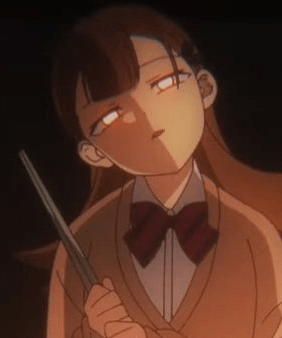
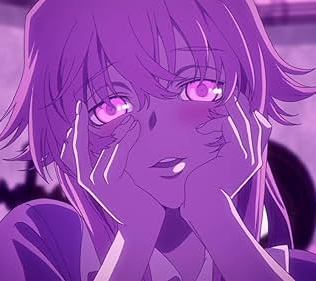
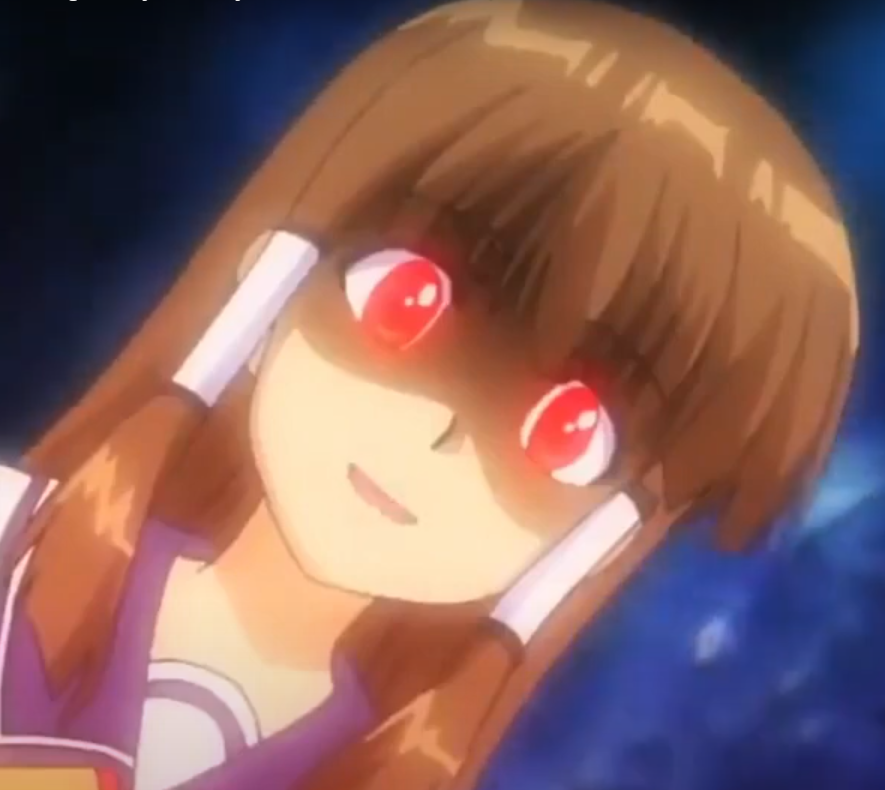
Yesterday I had a notion. I’d give some various AI programs the various prompt–Anime image of a yandere–and see what it came up with. The AI programs I chose for this experiment were ChatGPT, Grok, Microsoft Bing AI Creations and WordPress’s own AI.

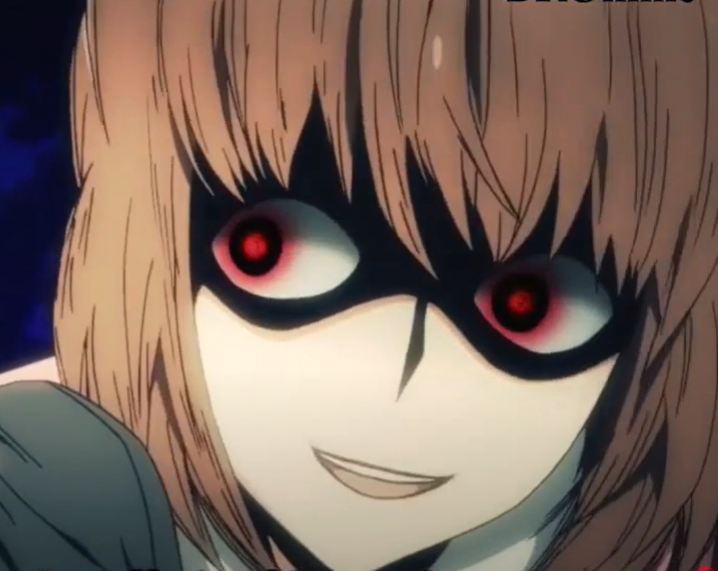
Now for those who don’t know what a yandere is, it’s a form of anime character. Always female, always in love, and always crazier than a sh*t house rat. The image should look something like the following:

They seems nice.

Anyways, here are the results, from worst to best.

Microsoft Bing AI Creations

I think someone didn’t understand the assignment.

Grok

In fairness, I had to work to get the picture this good. Grok seemed to think I wanted Goth. One of the pictures it gave me wasn’t even anime.

Outside of that, not bad.

Speaking of fairness, when Microsoft Bing AI Creations wants to do it’s job, it does the best Anime slop.

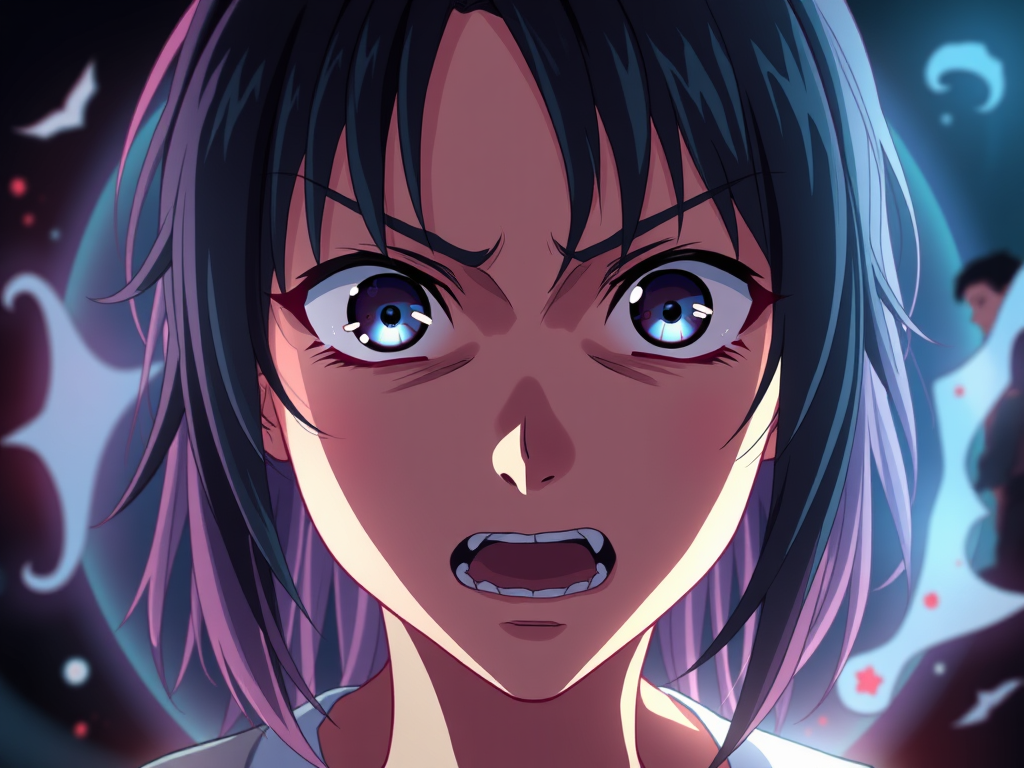
WordPress

I went through two tries, because the first one was so close, but really not on the money.

This is closer to the crazy look the character should have. Really fine.

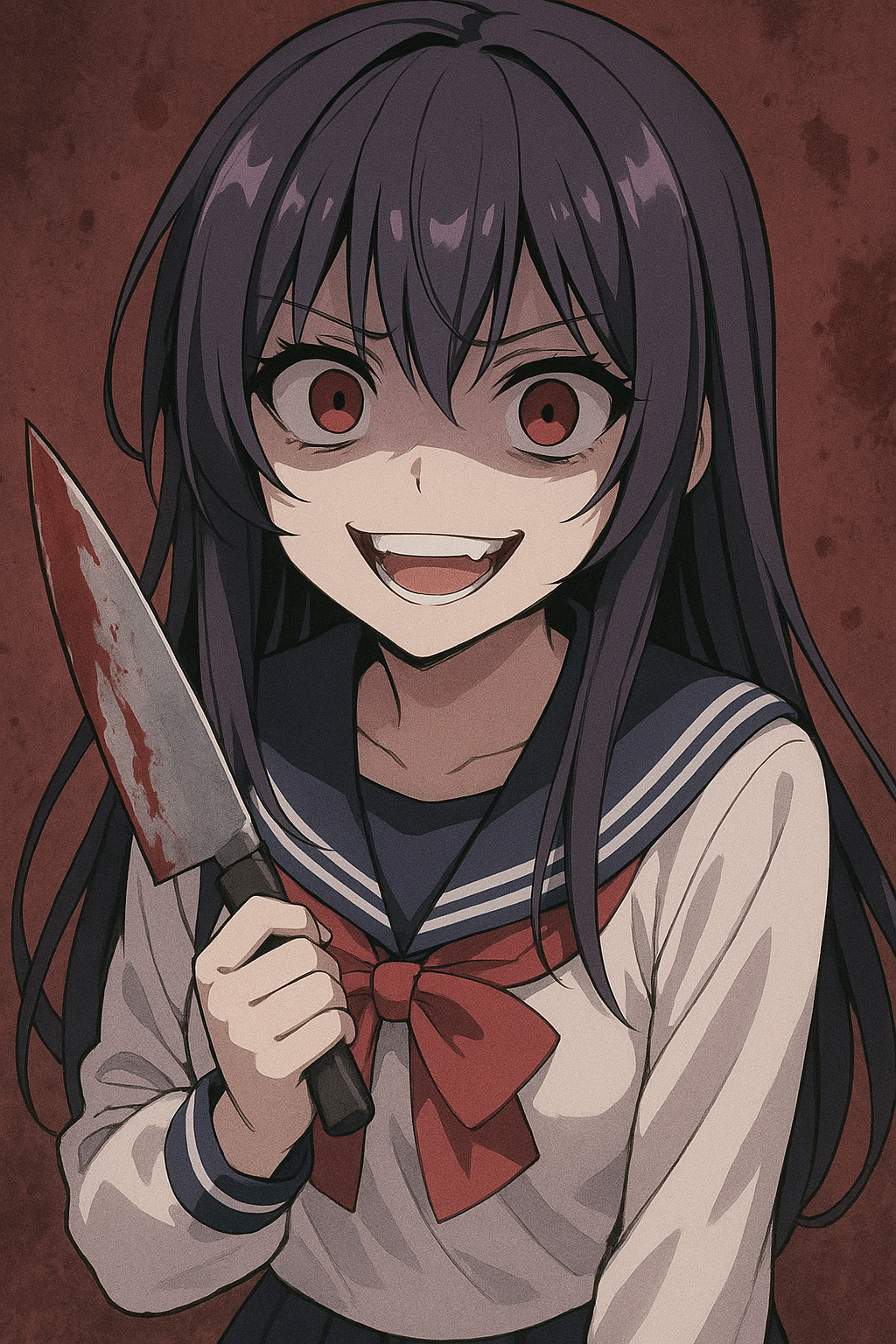
ChatGPT

Now remember, the prompt said, and I quote “Anime image of a yandere”. Nothing about a weapon, or blood. Just the character type.

That’s dead on perfect.

I’ve found I like Microsoft Bing AI Creations’ anime images the best. When, of course, it deigns to give me an anime image. ChatGPT, though (and to a degree Grok) give me what I want with fewer issues.

Anyways, very interesting. Might be worth doing again next year, see if there’s improvements.

So, anyone got a guess what Microsoft Bing AI Creations was thinking when it made its image?

[THOUGHTS] What I Enjoy Most About Writing?

Daily writing prompt
What do you enjoy most about writing?

[Note: The header image is AI generated by this site.]

Everything is probably a cheap answer, but it’s true. I enjoy the thinking about what to convey. I enjoy seeing black letters mar white background until the thoughts become words, the words sentences, the sentences paragraphs, and the paragraphs completed works. I enjoy editing, improving until I get it right. I enjoy reading what I’ve wrote, more if there’s been space between the process and the reading. I enjoy other people’s opinions of what I wrote.

Writing when I finish off an essay, a review, a story, and so on is the best.

I really should do it more often. Especially with this blog….

[THOUGHTS ON STORIES] Who’s the Protagonist (II) – Focusing on the Big Guy

[The header image was AI generated. I only wish I could draw that good.]

A couple of years back (more or less) I wrote a little on Protagonists. As a refresher, here are the terms as I see them as a Writer, Critic, and in general mad man:

  • Plot: A series of Action/Reaction events that form a story.
  • Protagonist: Character who’s choice has the greatest effect on the Plot.
  • Antagonist: Character that either opposes the Protagonist or is opposed by the protagonist. A proper Antagonist has a greater effect on the Plot than most.
  • Hero: The moral center of the Plot. They might not be the Protagonist, as that role isn’t a moral choice.
  • Villain: No shock, but a character that is the opposite of the Hero. Someone actively doing harm. They can even be the protagonist, as that role isn’t a moral choice.
  • Unfortunate Soul: Character who endangered by the Plot’s events that for reasons can’t do anything. They are never a Protagonist or an Antagonist, as they’re choices have little to no effect on the Plot.

Let’s add one final term, just for fun:

  • Force: An element that can drive the Plot that doesn’t have the agency of a Protagonist or Antagonist. It makes no conscious choice for or against, but actively effects the Plot.

That’s seems like a fine sampling.

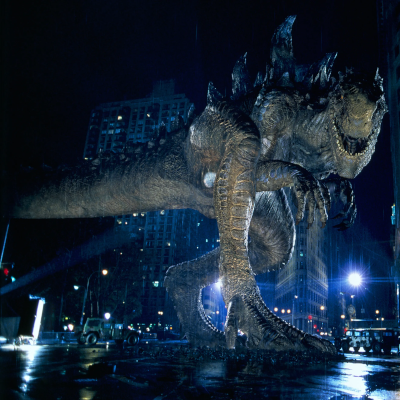
Let’s look at a few stories, see how this shakes out. As I am who I am, we are looking at the three Godzilla movies that share the name Godzilla. Starting with the 1998 classic Godzilla.

Don’t make that face. It’s unbecoming.

Spoilers, for what it’s worth.


The Protagonist in Godzilla 98 is Nick Tatopoulos. He’s the one who makes all the choices that matter. He wants to stop Godzilla from causing destruction.

Opposing him as the Antagonist is, of course, Godzilla. All Godzilla wants is to roam about and be the best little monster it can be. Towards the end, with its offspring slaughtered, it actively tries to harm Nick. The size of its choices matter.

Ahem.


With Godzilla 14, things get interesting.

The Protagonists in this story are the bug like Muto. Everyone reacts to their choices. It doesn’t matter how they’re destructive. Being the Protagonist isn’t a moral choice, and every choice they make moves the Plot forward.

That said, once again the Antagonist here is Godzilla. He doesn’t want the Mutos to get what they want. They threaten his existence and until they stop, he won’t stop, either.

Now where does the human character, Brody, stand here? He’s the Hero. His actions, while important, don’t change the basic conflict between Muto and Godzilla. He helps Godzilla deal with the situation, unquestionably. But when everything is said and done, he does nothing that changes the Plot. If he wasn’t involved, the conflict would have continued and ended just fine without him.

Albeit perhaps not as happily for the world.


Now if you thought that last bit was wrong headed… well you ain’t heard nothing yet.

The Protagonist in the original Godzilla is the character you see the least: Daisuke Serizawa. Standing against him is the Antagonist… Hideto Ogata.

Yeah. That’s right. Godzilla doesn’t matter in his own first movie. at best he’s a Force.

Isn’t that wild? But hear me out.

What Godzilla is is unimportant. He doesn’t have to be a radioactive dinosaur. He could be anything from a giant octopus (which he almost was) to radioactive sludge.

What matters is that he’s a problem that needs solved.

Serizawa has the solution to that problem. It is his choice that matters the most in the movie. To refrain from acting means the threat continues unhampered. Acting, on the other hand, might unleash a far worse threat. In fact, Serizawa is pretty certain that it will.

Ogata, however, opposes this. He sees only the threat before them and forces Serizawa into a decision. And, in my humble opinion, that decision is the worst possible choice.

To reinforce this, remember there is only one scene between Serizawa and Godzilla. Godzilla, at the time, is minding his own business. His threat, while real and present, is also theoretical at that point.

As I’m throwing cod theory about, let me say that the real antagonist should have been Emiko Yamane. Ultimately she’s the one who betrays Serizawa on so many levels. But that’s expecting a little much from a film out of the Fifties.


Now that was fun. Might go back to this little thought experiment at another time.

[THOUGHTS ON STORIES] Exploring Nero Wolfe Mysteries: A Deep Dive

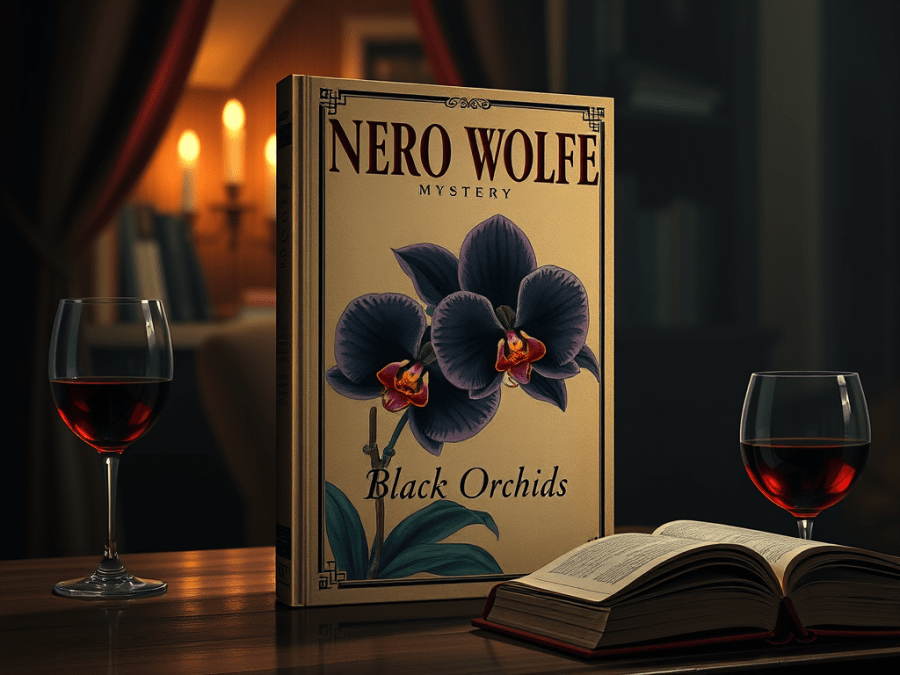
There’s very little better than a Nero Wolfe mystery. They’re just something else. I’m reading Black Orchids right now. The only reason Wolfe is getting involved in the murder is so he can lay hands on the titular flower. That guy is so self centered, it’s hilarious. Book’s been fun so far, too.

[Sorry about the misleading title. Out of curiosity I asked WordPress’s AI to come up with one and this was its choice. With the post being only a paragraph at the time, how could I resist? The post header’s AI too, for the record.]

Learning Something New (If Not Really That Useful)

I discovered today something shocking. This classic and ever so important post has not been restored to this site after the reboot. As you can see, I’ve strove to correct this gross state of affairs by reposting it now. I have also planned an equally important and vital follow-up for, say, tomorrow. Or so.

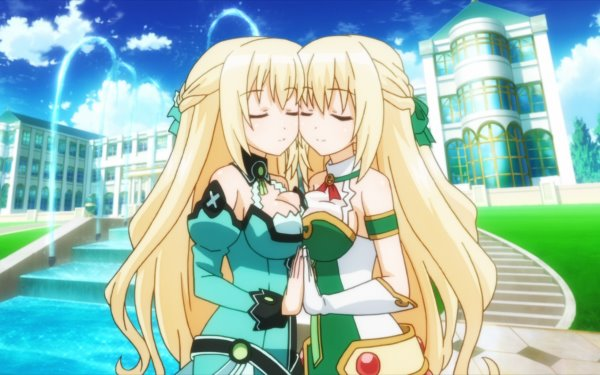
I’d heard of “symmetrical docking” before.  Even seen an example of it.  Such as this, below:

Symmetrical Docking 000

I thought I’d post this image a second time, but after drawing arrows to fully describe the “symmetrical docking”.  So everyone could see and understand just where I was coming from.  Maybe even blow up the proper section of the image.  Deleting everything else.  Save the “symmetrical docking”.  And the arrows.

Then I remembered I wasn’t thirteen.

Really.  This has been a problem of late.

In essence, symmetrical docking describes two anime females (or just plain ole females) standing so close that their boobs are smooshed together.  As above.

Aren’t you glad you now know this?  Isn’t your life more fulfilled?

Maybe if you’re thirteen…

Knowing the term, I began wondering just where it came from.

Because I’m that way.

The quickest to do this, I felt, was heading over to TV Trope.  What with it being a veritable fount of useless knowledge, I figured I’d find it’s page in no time.

Actually it took a little more than that, but this silly little essay is already almost 200 words long, and that’s about 200x longer than it should be.  To summarize, here’s what I learned, via this quote:

A phrase commonly used to describe a picture of two girls standing so close together their breasts are squished against each other. Originated from a Super Robot Wars Alpha 2 Yonkoma [4 panel comic] where, instead of showing Cho Ryu Jin’s [a giant robot’s] Symmetrical Docking Transformation Sequence, a picture of original characters (with huge breasts) Kushua Mizuha and Seolla Schweitzer are shown in [said] position.

Which looks like this:

Symmetrical Docking 001

It’s the “squish” onomatopoeia in the second panel that really sells this strip.

Anyways, that’s what I learned today.  And now you know.  And knowing is half the battle.  Or a few cells of memory in your head that you’ll never use for important facts.

Honestly, I don’t see why I should be the only one to suffer.


[THE HELL… ?!] Fixing Problems That Didn’t Need Fixing

Since rebooting this blog (a process, I must say, that has been much simpler than rebooting the Sister Site) I have notice a few old standby posts that have fallen to the wayside. One of which is the The Hell… ?!, in which I rant about the crazy things I have seen or have happen to me. I’ve done only two of them since starting over.

Perhaps this is understandable. I was so much younger and slightly (very slightly) less handsome back when I started things here at Welltun Cares Presents. Not a lot shocks and outrages me any more. I may even have become jaded.

Other things that have dropped away are less understandable. For instance, ranting about how stupid Green Arrow is. This never grows old for me. As well as it shouldn’t, as it’s an ever fresh topic. Everyone should rant about how stupid Green Arrow is. At length. With passion.

It’s shocking more people don’t.

WHAAAA?!

In between these two points of obvious understanding and bewildering disbelief sits a third topic: My love for the comic book character Power Girl.

Talking about her wasn’t necessarily a big part of this blog. It’s not like I’m her biggest fan, after all. I have no action figures. I own one collection of her comics, which, I should add, was given to me as a birthday present. While I know a healthy chunk about her history, I can’t point to individual stories featuring her. In fact, calling myself a fan might not be wholly accurate. I might just like the concept.

That said, unlike with the The Hell… ?! series, where I debated not rebooting, I always considered going back to the Other Maid from Krypton. My problem was that for a while there was so very little new pictures going around. It seemed like DC was avoiding using the character.

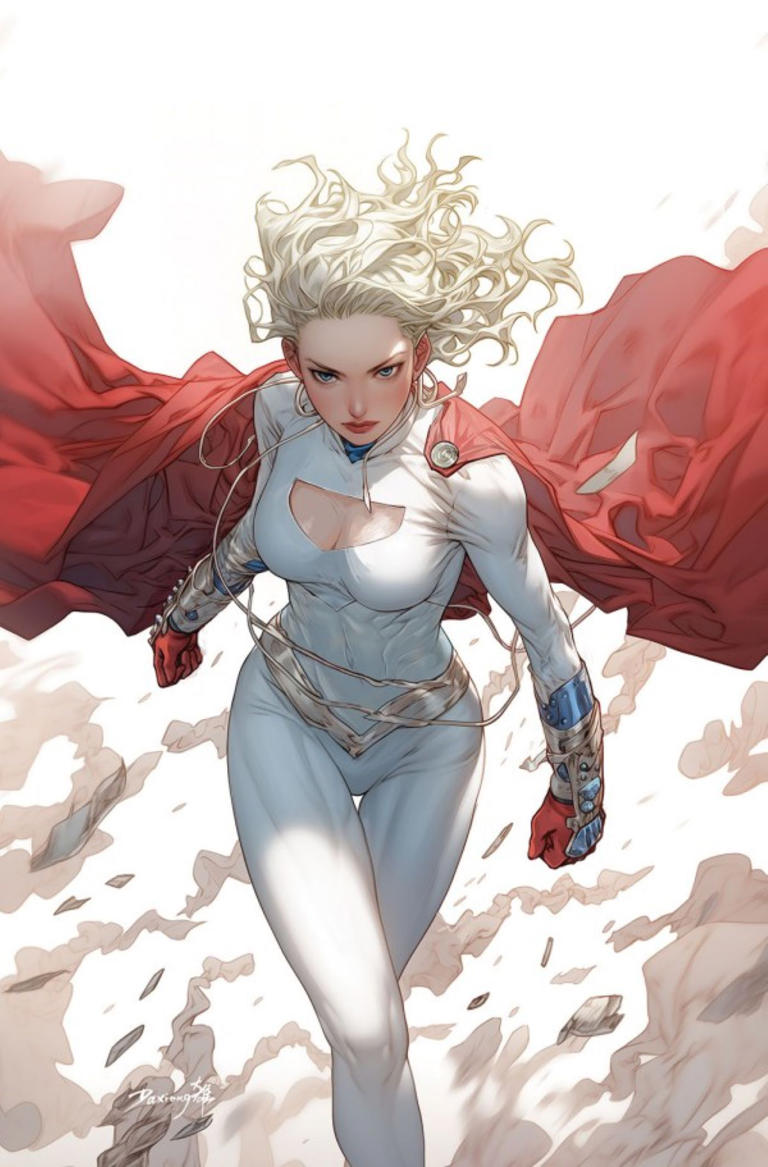
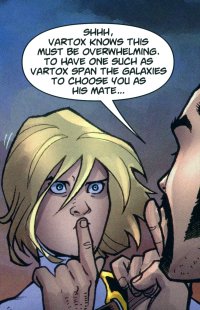
Looking at the character over to the right, I can see two reasons why this might be. These days it seems the bigger the reasons, the less likely the character is used. And that’s a damn shame, considering how “tolerant” the world is supposedly getting with diversity.

Today, though, Constant Reader henrybrennan has solved two problems for me. He’s given me another The Hell… !? post AND a blessed reason to talk about Power Girl.

I give you this headline.

Really.

Really.

Let’s look at the new costume.

Now let’s look at the classic Power Girl costume again:

Huh.

Huh.

Now let’s look at Supergirl.

And again, Classic Power Girl.

And, again, that new costume.

Yeeeeeeeeyeah. Not really anything different there, is there?

Portrait of a man on the verge of losing a finger. Among other things.

Don’t get me wrong. It’s probably the best costume… oh God, as I’m typing this, I realized something. They’ve recently changed Power Girl’s secret identify to Paige, and I didn’t get why until just now. It was originally Karen, and now Karen has a nasty stigma to it.

Wow am I dense.

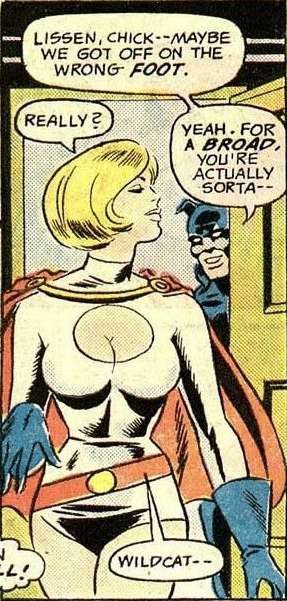
Anyway, nice costume. Not sure about the face, as it doesn’t seem to capture the attitude Power Girl has been known to have (should be more like the right, frankly). Though I do like it.

What I can’t see is how it’s any different a change from what she’s been known to wear. The character was already quite distinctive. And not just because of the usual two reasons.

I dunno. Maybe it’s me. Maybe if I was a paid journalist, I could see how the new costume does anything the old costume doesn’t.

Or, as I have admitted, I am dense. Maybe that’s it. Maybe if I studied both characters really hard, maybe then I’ll see and know better.

Yes! Yes, that’s what I’m going to do. An in depth analysis of the two characters.

Total focus, maximum effort! I got this!

You may never hear from me again.

[THE HELL…?!] What is the Point Of the Review, Then?

WordPress has gone all in with the AI. Not only does it have something that will write my posts for me (something I find interesting but repellent) it will also go through what I’ve written and judge me for it. This latter one is actually kind of useful and I might use more of it in future. The former I’ve used for material here and, again, it might be good to go to that well at another time.

What I will not use AI for is the writing of excerpts. There’s a little feature on my dashboard that will write the damn things for me, and to the last I’ve found them more useless than useful.

Here’s a sample, created from my Friday the 13th review (Spoilers for a 40+ flick):

“Friday the 13th” (1980), written by Victor Miller and directed by Sean S. Cunningham, follows a group of young people who attempt to reopen a doomed campground and are killed one by one. The lone survivor, Alice, eventually confronts the killer, Mrs. Voorhees, whose motive is revenge for her drowned son, Jason. The film, while not a cinematic masterpiece, is appreciated for its suspense and classic horror elements. Despite initial mixed reviews, the film is recognized today for its significant impact on the horror genre.

That’s basically my whole frickin’ review right there. Why would readers click on through to read more?

It spoils the damn movie, too. I give spoiler warnings over there for a reason, damn it.

Best of all, I told the thing the desired length was 50 words. That puppy up there? 85 words. So it’s also chatty.

I mean no matter the length I set it will ALWAYS go over. Always.

Do you want to know what a good excerpt looks like? Try this:

A group of young people make the mistake of trying to reopen the wrong campground.

That’s it. That tells you what the film is without ruining the experience. I could give the score, that would be okay. But whatever I do, at least I’m not stomping all over my review.

Geez. The Hell, man. The hell.

Furthermore: The excerpt for this post?

The author expresses mixed opinions on WordPress’s AI features, praising its ability to review posts but criticizing its automatic excerpt generator. The latter, they argue, drafts lengthy summaries that essentially spoil full reviews, and ignore set content length limits. They highlight a manually crafted, concise synopsis as a more desirable excerpt.

51 words. It’s like it’s trying to cheese me off.

Now fair’s fair. Here’s the AI Assistant reviewing what I’ve wrote up to this point:

The post content discusses the author’s mixed opinions on WordPress’s AI features. They appreciate the AI’s ability to review posts but criticize its automatic excerpt generator. The author argues that the automatic excerpts are lengthy and spoil the full reviews instead of enticing readers. They provide a concise, manually crafted synopsis as a better alternative.

Now that’s helpful.

[THOUGHTS ON STORIES] Who is the Protagonist? (I)

The mechanics of a story is only interesting to writers and critics. As I am both, off and on, I tend to think about such things. Thus the readers of this site can benefit from the ravings of an unsound mind.

I did say I was a writer AND a critic, remember.

While thinking about the matter, I came up with some interesting thoughts on classic Genre films. So in order to process this, I thought I’d write up an essay and set some terms. This might drift over to the Sister Site at some point, as it might be germane to the proceedings. It’s also going to be long, so I’m stretching it out a few days.

Let’s start with the basics. Things most writers and critics can get behind.

First off, most Stories, be it in film, on stage, or in a book, have this thing called a Plot. In the simplest terms, the Plot is Action/Reaction. An Action happens and there is a Reaction to it. It is motion, it is movement.

The Story’s Protagonist is the character whose Actions/Reactions matter the most. It is his (hers, its, whatever’s) who makes the choice or choices that matters most.

In Star Wars: A New Hope, Luke Skywalker is the Protagonist. It’s his decision to help Obi-wan Kenobi that affects every other decision down the length. Everything hinges on that one choice.

In Beast from Twenty Thousand Fathoms, Thomas Nesbitt is the Protagonist. His efforts to warn the world about the Beast, the Rhedosaurus, brings end characters that wouldn’t have been involved otherwise and, in the end, it’s his experience with radiation that solves the final problem. His choices mattered.

Stories that don’t have a Protagonist are possible, but examples don’t leap to mind. Keep in mind it’s not the length of “screen time” that determines who the Protagonist is. It’s the Weight of the Choice that as a rule matters.

I’ll get back to Weight of Choice in a second.

Opposing the protagonist is the Antagonist. This character either Acting (doing something the Protagonist opposes) or Reacting (opposes something the Protagonist wants). With this character, too, the Weight of the Choice defines him (her, it, whatever). The Character whose choices give the Protagonist the most problems is often the Antagonist.

To go backwards, in Beast from Twenty Thousand Fathoms, it is the Rhedosaurus who is the Antagonist. It wants to stomp around the place and eat passing people. Nesbitt opposes this, first by warning people of the existence of the Rhedosaurus, then by confrontation.

In Star Wars: A New Hope, the Antagonist is Grand Moff Tarkin. Oh, yeah, Tarkin. He’s the one calling the shots. He leads the tropes, makes the decision to destroy random planets, and so on and so fort. Darth Vader, as impressive as he is, is but a lackey.

Now the terms Protagonist and Antagonist are not moral terms. While the Protagonist is often a Heroic figure, that is not what defines him. Same is true with the Antagonist. Both of them can be Good People; both of them can be Bad People. It’s really not relevant.

What is relevant is the Weight of Choice. How does the choice affect the Plot? How does the choice affect the one making it? The bigger the change, the more weight it has.

In both my examples, the choices made by the protagonists alter the course of the Plot. They save people, they get people killed, they are harmed by their actions and their actions harm others. If they weren’t in the Story everything would change. It would not be the same story.

To give another example, look at the Mystery TV series Columbo. The title character, Lieutenant Columbo, is not the Protagonist. That would be the murderer of the episode. It is their choices that make the plot run. Were they not there, nothing would happen. Columbo, the Antagonist, is there to stop them. His choices have Weight, but not as much as those he opposes.

Were we to put things in a more moral fashion, we would use terms like Hero and Villain. In fact, I’m going to use them as actual Character Types like Protagonist and Antagonist.

The Hero is the moral force in the story, the one’s whose attitudes the Reader is probably supposed to emulate. He (She, It, Whatever) might not do the right thing all the time, but by and large his actions are what one would consider Moral and Good.

The Villain is the opposite number. He (etc, etc) is in it for himself, his actions are selfish and more often than not Evil.

I’m in a mood. I’m adding a third Character Type: The Unfortunate Soul. Unlike the Protagonist and Antagonist, the Unfortunate Soul has very little agency. While they can act, they need help. They can’t do it on their own. Their choices have the least Weight of them all.

To give examples, let’s look at the detective series involving Sherlock Holmes.

Holmes is the series Protagonist. His decisions shape the course of the plot. His clients are Unfortunate Souls who can’t resolve their own dilemmas. For them Holmes risks all, whether just his reputation as a detective or, on occasion, his very life.

The people Holmes goes after are, more often than not, are Villains. They want something they shouldn’t have. You could argue that Holmes’ opposition to them makes them Antagonists, too. However not only they don’t often have the same Weight of Choice your common Antagonists have, they don’t often have conflict with the Protagonist beyond a basic level.

For instance, the killer in The Hound of the Baskervilles actively tries to get around Holmes to accomplish one more murder. With A Scandal in Bohemia, Holmes is pitted against Irene Adler in acquiring certain pictures; it is a definite struggle between two wills. The Final Problem and its sequel, The Adventure of the Empty House have the main threat be killers after Holmes. Each present conflict for Holmes and are in fact Antagonist.

Oh, and Doctor Watson? He’s the Hero, not Holmes, despite the detective’s virtuous efforts. He tends to be the moral center of Holmes’ world.

Simple. There are always going to be exceptions to the rule for these terms, and with the possible exception of the Protagonist not all are needed for a Story. That’s the nature of the beast.

Next time, we’ll look at more individual stories and see who is the protagonist and who is not.